guide 01 · digital download
you can have a fine day ... and still come home completely hollowed out.
running on empty explains why. not as a complaint. as an explanation you can finally point to.
is this for me?
this guide is for you if…
you don't need all of these to be true. one is usually enough to know.
- you leave social situations drained, even when they went well
- you rehearse conversations before they happen, and replay them for days after
- it has always taken more out of you than it seems to for everyone else
- you've been told you "seem fine" while quietly managing a lot
- you have a neurodivergent diagnosis ... or you're starting to wonder
- you want language for something you've felt but never been able to name
inside the guide
what you'll find
running on empty walks through what actually happens when a neurodivergent person navigates a neurotypical world ... layer by layer. it doesn't speak to you like a patient. it speaks to you like someone who has done all of it themselves.
rehearsing conversations before they happen
why your brain scripts the whole exchange in advance ... and why that's effort, not anxiety.
overthinking your verbal response
the questions running underneath while you're just trying to reply.
monitoring your non-verbal cues
tone, face, eye contact, the space you take up ... all tracked at once.
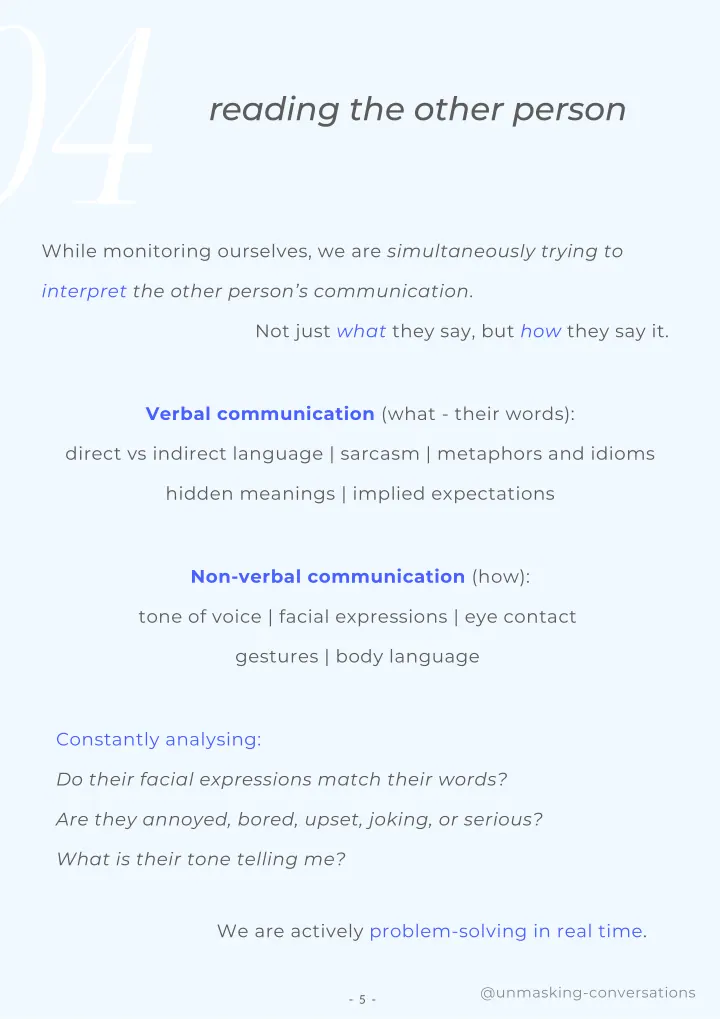
reading the other person
why "just be yourself" was never simple advice for you.
becoming different versions of yourself
the quiet cost of being fluent in everyone but you.
fighting the environment
when the lighting, the noise and the sensory load are the hardest part.
replaying interactions afterwards
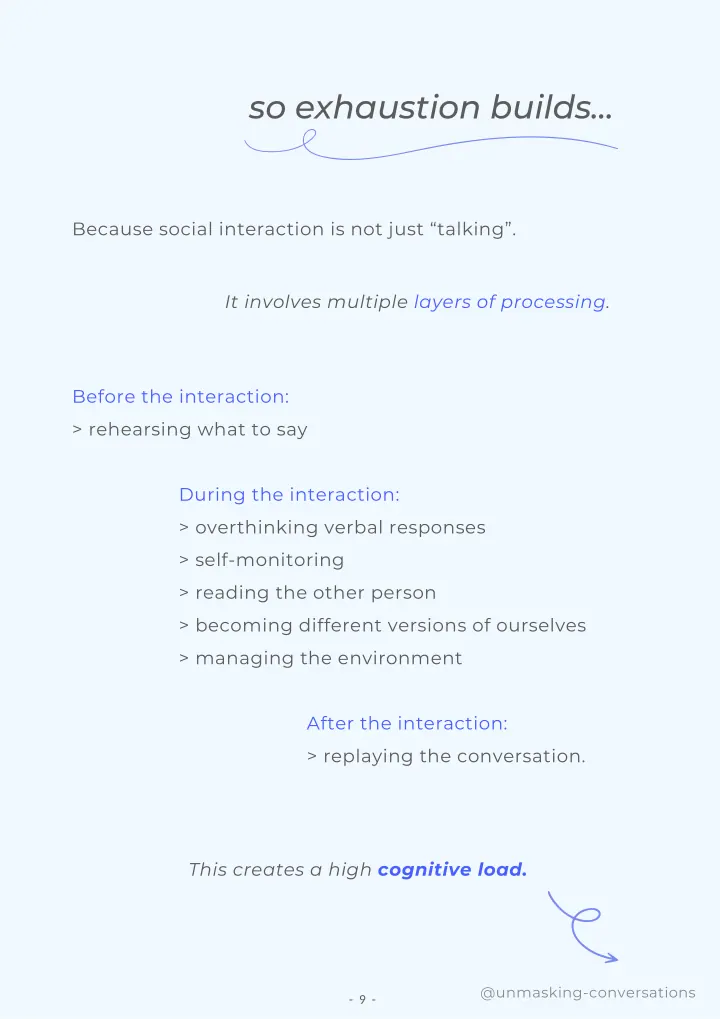
why a good day can still cost you the next two ... and how masking burns us out.
what this is
plain-language explanation. the mechanics of why social interaction costs you more. words for things you've felt but couldn't name.
what this isn't
a diagnosis. a therapy replacement. a list of "fixes". you don't need a diagnosis to recognise yourself in it.
a look inside
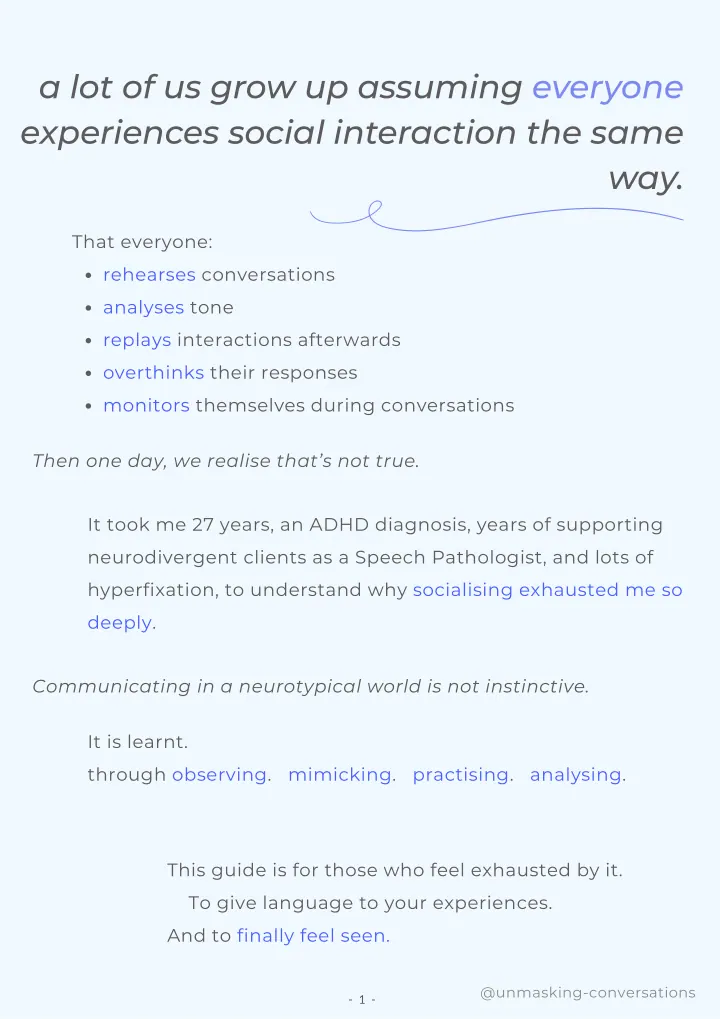
three real pages from the guide.
a note from me
i wrote this because i spent a long time not having the words for my own experience. communicating didn't feel instinctive ... it felt constructed. scripted, rehearsed, managed. and for years i thought that meant something was wrong with me.
it didn't. it meant my brain was working incredibly hard to navigate a world that wasn't built for how i communicate. if that resonates ... this guide is the thing i wish someone had handed me a long time ago.
— laura, @unmasking.conversations